To cut what you pay in gas and total fees, pick the cheapest all-in route, use lower-fee L2s when the math favors it, and set conservative wallet fee caps before you submit. Three moves matter more than any others:
- Compare routes before you swap, not after. A route with lower advertised gas can still cost more once you add bridge and destination fees.
- Time non-urgent trades for low base-fee windows using eth_baseFeePerGas or a tool like Blocknative's fee estimator.
- Set maxFeePerGas and priority fee deliberately instead of accepting your wallet's default.
Pro Tip: On a $50 swap, gas can eat over 90% of your total cost on a congested mainnet. On a $50,000 bridge transfer, a 1% slippage slip costs $500, dwarfing anything you'd save shaving gwei off the gas price. OmniRout's route comparison shows both numbers side by side before you confirm anything.
Key Takeaways
Gas fee optimization works when you compare the full route cost, not just the gas price, and adjust your wallet settings and network choice based on that total.
| Point | Details |
|---|---|
| Know the fee stack | Base fee, priority fee, gas units, bridge fees, destination gas, and slippage all add up separately. |
| Time non-urgent trades | Track the base fee moving average with tools like Blocknative before submitting. |
| Set fee caps deliberately | Use a moving average plus a small margin for maxFeePerGas instead of a wallet default. |
| Match chain to transfer size | Small swaps favor L2s; large transfers hinge more on slippage and bridge fees than gas. |
| Compare routes with OmniRout | OmniRout shows gas, fees, and slippage per route before execution while keeping you in control of your keys. |
Table of Contents
- What Actually Makes Up Your Gas Fee Optimization Strategy?
- How Do You Lower Gas Costs on Every Trade?
- When Should You Use a Layer 2 or Bridge Instead of Mainnet?
- How OmniRout Puts These Tactics into Practice
- How Do Network Congestion and EIP-1559 Change What You Pay?
- What Tools Help You Predict Gas Fees Before You Trade?
- Is Speed Worth the Extra Cost, or Should You Wait?
- The Real Gap in How Traders Talk About Gas
- Preview Your Real Costs Before You Trade with OmniRout
- Frequently Asked Questions
- Sources
What Actually Makes Up Your Gas Fee Optimization Strategy?
Gas fee optimization only works if you understand what you're actually paying for. Since EIP-1559, every transaction fee splits into a base fee, which gets burned, and a priority fee, which goes to the validator. You set a maxFeePerGas as your ceiling; the network refunds you the gap between your max and the actual fee charged.
Gas price (in gwei) and gas units consumed (gasUsed) are different levers entirely. A simple transfer might use 21,000 units. A multicall touching three contracts can burn 300,000 or more. Multiply either number by a spiking base fee and your bill jumps fast.
Then come the costs your wallet doesn't show upfront:
- Destination-chain gas: bridging to a new chain means paying gas there too, in that chain's native token.
- Bridge or relayer fees: a flat or percentage cut for moving assets across chains.
- Slippage and MEV exposure: on a $20,000 stablecoin move, even 0.3% slippage is $60 quietly gone.
Fees spike whenever demand outpaces network capacity, and the three real levers are gas price, gas units, and which network you're competing on.
How Do You Lower Gas Costs on Every Trade?
Cutting your gas bill comes down to timing, tooling, and discipline with wallet settings. None of it is complicated once you build the habit.
-
Watch the base fee, not just the gas price your wallet shows. Pull data from eth_baseFeePerGas directly, or use a fee tracker like Blocknative or Etherscan's Gas Tracker. Base fees move in waves tied to block demand, and a dip of even 20% in the moving average is worth waiting for on a non-urgent trade.
-
Set maxFeePerGas using a moving average, not a guess. Recording the base fee across the last 10 to 20 blocks and adding a small margin above that average is a reliable way to avoid overpaying while still landing in the next block or two. This approach, sometimes called algorithmic fee estimation, can cut gas spend by double-digit percentages compared to accepting a wallet's flat suggestion.
-
Keep your priority fee modest when you're not racing anyone. One to two gwei above the median priority fee is usually enough to get included within a few blocks. Save aggressive tips for arbitrage or liquidation windows where speed genuinely matters.
-
Use batching and multicall where your router supports it. Bundling multiple actions (approve, swap, and sometimes bridge) into one transaction avoids paying the fixed overhead of separate transactions each time. Not every DEX router exposes this, so check before assuming you're getting the benefit.
-
Treat gas-refund mechanics with caution. Some older contracts used SSTORE refund tricks to lower effective gas cost, but network upgrades have repeatedly changed refund behavior, and relying on it is fragile. Skip it unless you know the current rules for the specific chain you're on.
Over-tipping is the quiet leak most traders never notice. A wallet's "fast" preset often pads the priority fee well beyond what's needed for inclusion within a block or two, and that padding adds up over dozens of trades a month.
When Should You Use a Layer 2 or Bridge Instead of Mainnet?
The right chain depends on transfer size, urgency, and whether you'll need the funds back on the source chain soon. Rollups and batching can cut gas by 30 to 50% compared to Ethereum mainnet for many swap sequences, but that savings only counts if you're not immediately paying it back out in bridge fees.
Cross-chain transfers stack four cost layers: source-chain gas, the bridge or relayer fee, destination-chain gas, and DEX slippage on the other side. Add them up before comparing anything to a same-chain swap.
- Small retail swaps (under a few hundred dollars): gas share of total cost is disproportionately high on congested mainnet, sometimes over 90%, so a low-fee L2 or alternative L1 almost always wins.
- Large stablecoin moves: bridge fees and destination gas are nearly fixed regardless of size, so they shrink as a percentage the bigger the transfer gets. Slippage becomes the dominant risk instead.
- Time-sensitive arbitrage: withdrawal latency on some bridges runs from minutes to days, which can erase the entire opportunity even if the fee math looks favorable.
| Route type | Dominant cost | Best fit |
|---|---|---|
| Same-chain DEX swap | Gas price and gas units | Frequent, small trades on one chain |
| Bridge plus destination swap | Bridge fee, destination gas, slippage | Larger transfers where fee percentage is low |
| L2-native swap | Base fee only, usually lower | Small to mid trades, staying on L2 |
How OmniRout Puts These Tactics into Practice
Reading about the fee stack is one thing. Seeing it broken down for the actual route you're about to take is another. OmniRout's route comparison shows estimated gas, bridge fees, and slippage side by side for every candidate path across its 30-plus supported chains, before you sign anything.
The flow is straightforward:
- Enter the token, amount, and destination chain.
- Review the all-in breakdown for each route: source gas, bridge cost, destination gas, and expected slippage.
- Set your wallet's fee cap based on what the route preview shows.
- Confirm the transaction from your own wallet.
Pro Tip: Before bridging, check whether you actually need the funds back on the source chain soon. If not, leaving them on the destination L2 avoids paying a second round of bridge and gas fees later.
Every step happens without OmniRout taking custody of your keys. The platform surfaces the numbers; you hold the assets and sign the transaction yourself, which matters if you've ever watched a "cheap" quoted rate turn expensive once destination gas and slippage got added in.
Quick pre-execution checklist: five checks before you hit confirm
- Add up the full cost: source gas, bridge fee, destination gas, and expected slippage together, not just the headline quote.
- Confirm the route actually supports your destination chain and note the bridge's withdrawal latency.
- Set maxFeePerGas near the recent moving average, a conservative priority fee, and a slippage tolerance around 0.1% to 0.3% for stablecoins.
- Split large transfers into smaller batches if pool depth looks thin, and test with a small amount first.
- Confirm you'll have the destination chain's native token for future gas, or pick a relayer-enabled route that handles it for you.
How Do Network Congestion and EIP-1559 Change What You Pay?
Congestion is the single biggest swing factor in your gas bill, and it has nothing to do with how well you set your own fee parameters. When block space demand spikes (a popular NFT mint, a volatile market moving fast), the base fee climbs algorithmically under EIP-1559's rules, sometimes doubling within a handful of blocks.
EIP-1559 changed the fee market from a blind first-price auction to a more predictable system: a base fee that adjusts block by block based on how full the previous block was, plus a priority fee you choose to influence ordering. The base fee gets burned rather than paid to validators, and your wallet refunds anything between your maxFeePerGas and the fee actually charged.
The practical effect for traders is that fees are now trending and somewhat forecastable rather than purely reactive. A base fee that's been climbing for the last five blocks is likely to keep climbing for a few more; one that's been falling tends to keep falling, at least in the short term. That trend is exactly what tools like Blocknative and the raw eth_baseFeePerGas RPC call let you track. Layer 2 networks add another variable: many post batched transactions back to mainnet periodically, so an L2's own fees can rise sympathetically when mainnet congestion spikes, even though the L2 has separate capacity.
What Tools Help You Predict Gas Fees Before You Trade?
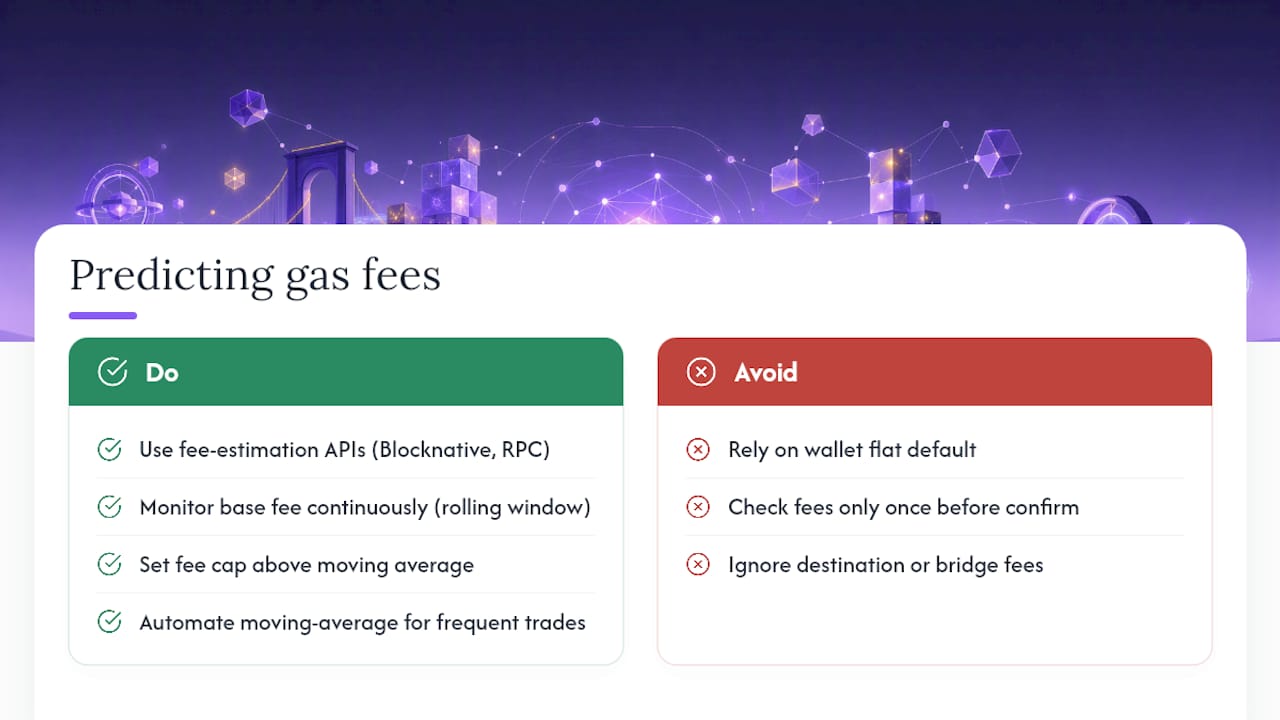
Guessing at gas fees is how traders overpay. Fee-estimation APIs pull live mempool data and recent block history to suggest a maxFeePerGas and priority fee that balance cost against confirmation speed. Blocknative's estimator and the standard eth_baseFeePerGas RPC endpoint both give you real numbers to work from instead of a wallet's flat default.
The more useful approach treats gas as a variable you monitor continuously, not something you check once right before clicking confirm. Recording the base fee across a rolling window of blocks and setting your fee cap a small margin above that moving average consistently beats a one-time snapshot, especially during choppy congestion periods when the fee can swing 30% within a few minutes.
Algorithmic prediction gets more useful the larger or more frequent your trades are. A trader executing a handful of transactions per year doesn't need much beyond checking a tracker before confirming. Someone running dozens of swaps a week, or moving large stablecoin positions across chains regularly, benefits from automating the moving-average calculation and letting the system flag windows where the base fee sits meaningfully below its recent trend. That's also where comparing quotes across multiple routes matters most, since the cheapest quoted rate can hide a high destination gas or bridge fee that only shows up once you dig into the full breakdown.
Is Speed Worth the Extra Cost, or Should You Wait?
Every fee decision is really a trade-off between certainty and cost. Paying a higher priority fee buys you a near-guaranteed spot in the next block or two. Waiting for a lower base fee saves money but exposes you to price movement in the asset you're trading, which can cost far more than the gas you saved if the market moves against you in the meantime.

The right call depends on what you're actually doing. Arbitrage and liquidation-adjacent trades have a shrinking window of profitability, so paying up for speed is rational; a $30 gas premium is nothing against a $2,000 opportunity that disappears in the next block. Routine portfolio rebalancing or a stablecoin move with no urgency is the opposite case: there's no economic reason to pay mainnet's fast-lane premium when waiting an hour for a quieter window costs you nothing but time.
Large transfers change the calculation again. For big stablecoin moves, intent-based relayers or batch-solvers can remove slippage and MEV exposure entirely, often coming in cheaper than a traditional liquidity-pool route even when the quoted gas looks higher. Speed and cost aren't a single dial. They're two separate variables, and the trades that lose money are usually the ones where a trader optimized one without checking what happened to the other.
The Real Gap in How Traders Talk About Gas
Most gas advice online is still about tricks: shave the gwei, wait for Sunday morning, set your priority fee to exactly 1.1 gwei above median. None of that is wrong, but it's optimizing the smallest line item in the bill. On a mid-size bridge transfer, slippage and destination gas routinely dwarf whatever you saved by timing your base fee perfectly.
The bigger failure I see in how people approach this is treating gas fee optimization as a wallet-settings problem instead of a routing problem. Your maxFeePerGas only ever touches one leg of a multi-leg cost. The leg most traders skip checking is the one that decides whether a route was ever worth taking.
That's the gap OmniRout's route comparison is built to close: it puts source gas, bridge cost, destination gas, and slippage in front of you as one number before you sign anything, instead of asking you to mentally tally four separate fee lines across two block explorers and a bridge dashboard. Fix your wallet settings, yes. But check the whole route first. That's where the real money leaks.
Preview Your Real Costs Before You Trade with OmniRout
Every tactic in this guide (timing base fees, setting sensible maxFeePerGas, choosing the right L2) only pays off if you're comparing it against the full route cost, not just the number your wallet shows first. OmniRout's route comparison lays out estimated gas, bridge fees, and slippage for every candidate path across 30-plus chains, side by side, before you commit to anything.
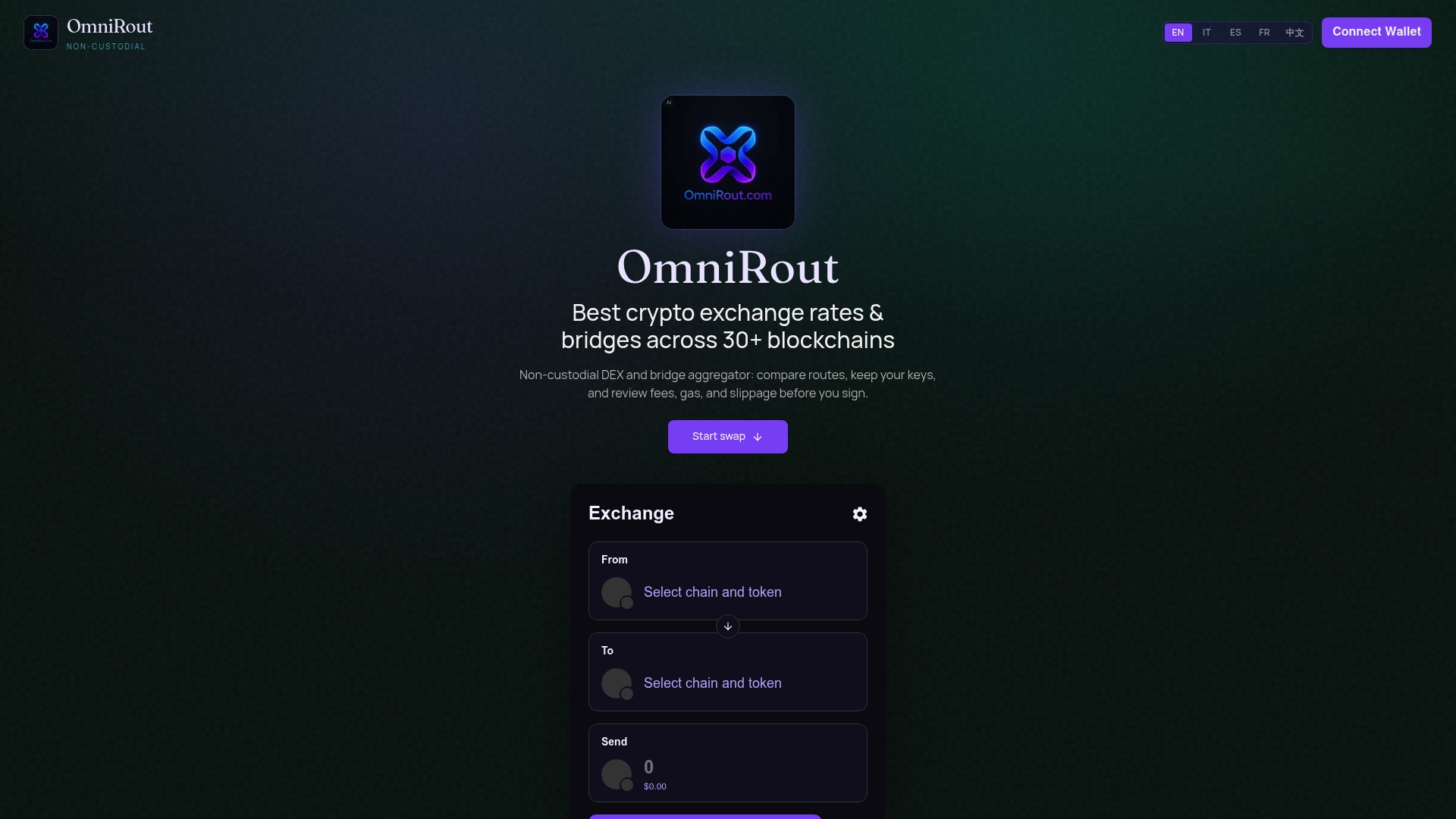
You stay in control the whole time. OmniRout never takes custody of your keys; it shows you the breakdown, and you sign the transaction from your own wallet. Run a small test swap first, see how the route preview matches what actually lands in your wallet, and use that as your baseline before moving larger amounts. Head to OmniRout to compare your next route and see the all-in cost before you confirm.
Frequently Asked Questions
What is the single fastest way to lower gas fees on a swap? Compare the all-in cost across available routes before confirming. A route with a lower advertised gas fee can still cost more once bridge fees, destination gas, and slippage are added.
Does EIP-1559 mean I always get refunded if I set a high maxFeePerGas? Yes. Under EIP-1559, your wallet only charges the base fee plus your chosen priority fee, refunding any gap between your maxFeePerGas ceiling and the actual fee charged.
Is it always cheaper to use a Layer 2 instead of mainnet? Usually for small to mid-size trades, since gas can otherwise eat a disproportionate share of a small transfer's value. For large transfers, bridge fees and slippage often matter more than the gas savings from switching chains.
What slippage tolerance should I set for a stablecoin transfer? Around 0.1% to 0.3% generally balances execution reliability against unnecessary MEV exposure. Going much above that opens you up to worse fills without a real benefit.
Can batching or multicall actually save meaningful gas? Yes, when your router supports it. Bundling steps like approve and swap into one transaction avoids paying the fixed overhead of each transaction separately, and this can add up fast across frequent trading.
Sources
- Blockchain Gas Fees Explained: Spikes and Savings
- Ethereum gas explained
- Managing Gas Fees on On‑Chain DEX Swaps: A Playbook - TradingIM
- How to Use a Cross-Chain Aggregator Without Losing Money to Slippage