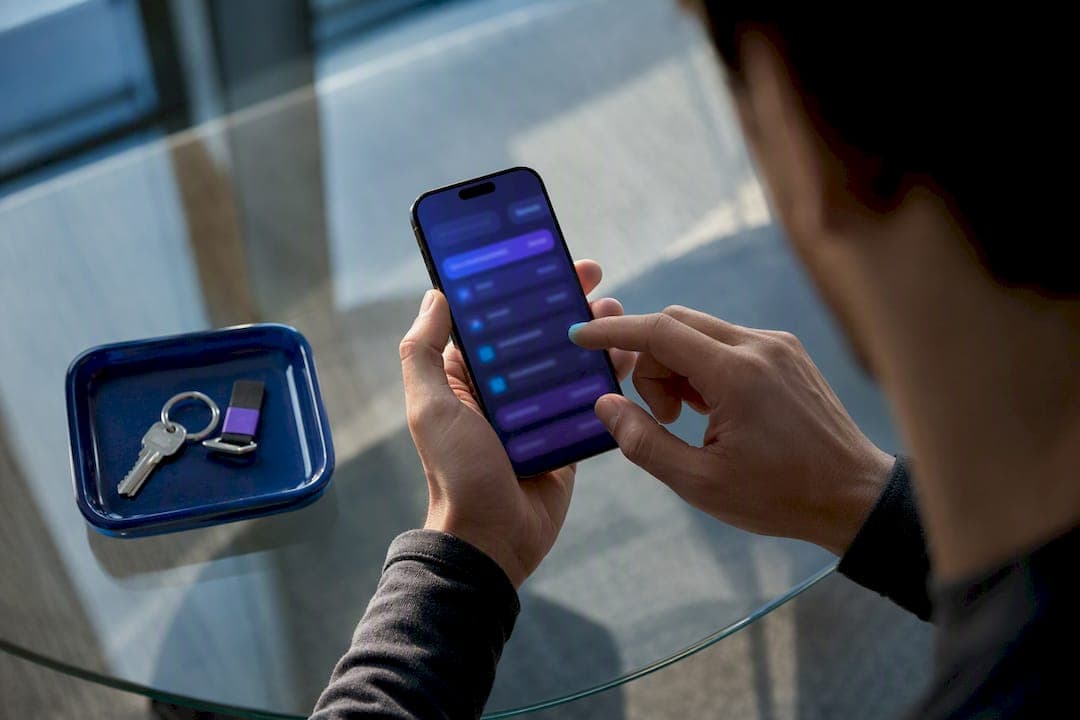
The safest posture for 2026 is simple to state and mildly annoying to maintain: a hardware-backed vault wallet that never touches a dApp, a separate hot wallet for spending, and a disposable interaction wallet for anything experimental, layered with weekly approval checks and mandatory transaction simulation before every signature. Large holdings should move to multisig or MPC custody. A non-custodial route comparison tool like Omnirout helps you swap and bridge without adding a new point of custodial failure.
TL;DR:
- Moving large holdings to multisig or MPC custody significantly reduces the risk of private key compromise in case of social engineering or device failure.
- Regularly revoking unused token approvals and setting limits on new transactions prevents malicious contracts from draining funds without notice.
- Using separate wallets for savings, spending, and experimental interactions limits exposure and allows tailored security measures for each purpose.
- Smaller, disposable interaction wallets for testing new protocols minimize potential damage if compromised, especially when paired with transaction simulations.
- Omnirout helps ensure non-custodial swaps and bridges across over 30 chains, providing route transparency and fee comparison before signing any transaction.
Table of Contents
- What Is Wallet Security for DeFi, Really?
- Hot, Cold, Smart, or MPC: Which Wallet Fits Your Balance?
- Why Do Token Approvals Wreck So Many Wallets?
- How Should You Split Wallets Across Devices and Risk?
- When Do You Need Multisig or MPC-Level Controls?
- How Omnirout Fits Into a Safer DeFi Setup
- What's the One Move Most DeFi Users Skip?
- Swap and Bridge Without Handing Over Your Keys
- Sources
What Is Wallet Security for DeFi, Really?
Wallet security for DeFi isn't a single product, it's a set of habits layered around your private keys. Off-chain attacks, meaning phishing, social engineering, and compromised accounts rather than smart contract bugs, drove 80.4% of funds lost in 2024. That number should reset how you think about risk. Most DeFi losses aren't exotic exploits, they're a person clicking the wrong signature request.
Here's an hour-long checklist that closes most of that gap.
- Write your seed phrase on paper or stamp it into metal, store it in two separate physical locations, and never type it into a device connected to the internet.
- Split your funds across three wallets: a cold vault for savings, a hot wallet for daily spending, and a throwaway interaction wallet for new protocols.
- Revoke unused token approvals monthly using Revoke.cash or Etherscan's token approval checker.
- Turn on transaction simulation (Blockaid, or the built-in previews in Rabby Wallet) and read what a contract will actually do before you approve it.
- Use a dedicated browser profile for DeFi, keep extensions to a minimum, and bookmark every dApp URL instead of clicking search results.
- If you suspect compromise: revoke every approval tied to that wallet, move remaining funds to a fresh address immediately, and document the transaction hashes for later reporting.
Pro Tip: Set a recurring calendar reminder for the first Sunday of every month labeled "revoke and review." Security habits that depend on memory alone don't survive more than a few weeks.
Hot, Cold, Smart, or MPC: Which Wallet Fits Your Balance?
Every wallet type trades convenience for exposure somewhere. A hot wallet, meaning a browser extension or mobile app with keys stored on an internet-connected device, is fine for balances you'd be comfortable losing to a bad afternoon. Anything past a few thousand dollars belongs in cold storage.
- Hot wallets (MetaMask, Rabby): fast, convenient, and the first target for malware and phishing kits.
- Hardware wallets (Ledger, Trezor): keys never leave the device, but you're still trusting the software that displays what you're signing.
- Smart wallets (account abstraction): support spending limits, session keys, and social recovery, which shifts the risk from "lost seed phrase" to "misconfigured policy."
- MPC wallets: split the private key across multiple parties so no single device or person holds the whole thing, ideal for treasuries and teams.
A practical threshold: keep spending money in a hot wallet, savings in hardware, and anything institutional or shared across a team in MPC or multisig. When you sign on a hardware device, check that the on-screen summary matches what your software wallet claims. Ledger's newer clear-signing features exist specifically because blind signing, approving a transaction without a readable preview, is how most drainer scripts succeed. If your device shows a wall of hex code instead of plain terms, stop and verify the contract elsewhere before you sign.
Why Do Token Approvals Wreck So Many Wallets?
When you swap or stake, you're not handing over funds directly, you're granting a smart contract permission to move tokens on your behalf. Most wallets default to an unlimited allowance unless you manually set a cap, which means a single compromised or malicious contract can drain far more than the transaction you intended. Georgia Tech research cited by Alchemy found only 10.8% of users regularly check and revoke unused approvals, leaving the other 89% carrying open-ended risk they've likely forgotten about.
Fixing this takes three repeatable steps:
- Open Revoke.cash or Etherscan's Token Approvals tool and connect the wallet you want to audit.
- Sort by allowance size and revoke anything unlimited or tied to a protocol you no longer use.
- Set a recurring monthly check, since automated monitoring measurably shrinks your exposure window between when a contract gets exploited and when you notice.
Before you approve anything new, run it through a simulator like Tenderly or Blockaid, or lean on Rabby Wallets built in preview, and check three things: the token amount matches what you expect, the allowance is capped rather than unlimited, and the destination contract matches the protocol you're actually using.
Pro Tip: When a dApp offers a choice, always pick a capped or time-limited allowance over "unlimited," even if it means approving twice. Session keys that expire after a set window are becoming standard on newer smart wallets and remove the need to remember revocation at all.
How Should You Split Wallets Across Devices and Risk?
The three-wallet model isn't theoretical, it's the structure serious DeFi users actually run: a cold vault that never signs a dApp transaction, a hot wallet funded with only what you're willing to spend this month, and an interaction wallet you top up in small amounts specifically for testing new protocols.
| Wallet role | Typical balance | Device | Connects to dApps? |
|---|---|---|---|
| Cold vault | The Majority of holdings | Hardware wallet, offline | Never |
| Hot wallet | Spending money, days to weeks of use | Phone or dedicated laptop | Occasionally, vetted apps only |
| Interaction wallet | Small, disposable amount | Same device as hot wallet | Yes, for new or unaudited protocols |
Pair this structure with basic device hygiene: a laptop used only for crypto, a reputable VPN on public networks, and an operating system kept current with security patches. Audit your browser extensions quarterly, since a single malicious extension can read clipboard data and swap a destination address without any obvious sign. Bookmark every protocol you use regularly rather than trusting search results or links from social media. Finally, test your seed phrase backup at least once a year by restoring it to a spare device, because a backup you've never verified is just a hope.
When Do You Need Multisig or MPC-Level Controls?
Individual habits get you far, but teams and large holdings need structural controls that don't depend on any one person having a good day. Multisig and MPC both eliminate the single point of failure that comes with one private key sitting on one device.
- Multisig requires multiple approvers to sign before a transaction executes, useful for treasuries and DAOs.
- MPC splits signing across parties without ever reconstructing a full key in one place, which suits teams needing faster approvals than multisig committees allow.
- Policy engines running in trusted execution environments can enforce allowlists, rate limits, and anomaly detection automatically, catching a suspicious transfer before a human even reviews it.
- Timelocks and audit trails add a delay window and a permanent record, which turns "the money's gone" into "we have twelve hours to catch this."
Certifications like SOC2 Type II and ISO/IEC 27001 are worth checking when you're evaluating any custody or policy provider that touches your workflow. The strongest setups combine a hardware signer for human approval with an MPC layer underneath it, giving you two independent barriers instead of one.
How Omnirout Fits Into a Safer DeFi Setup
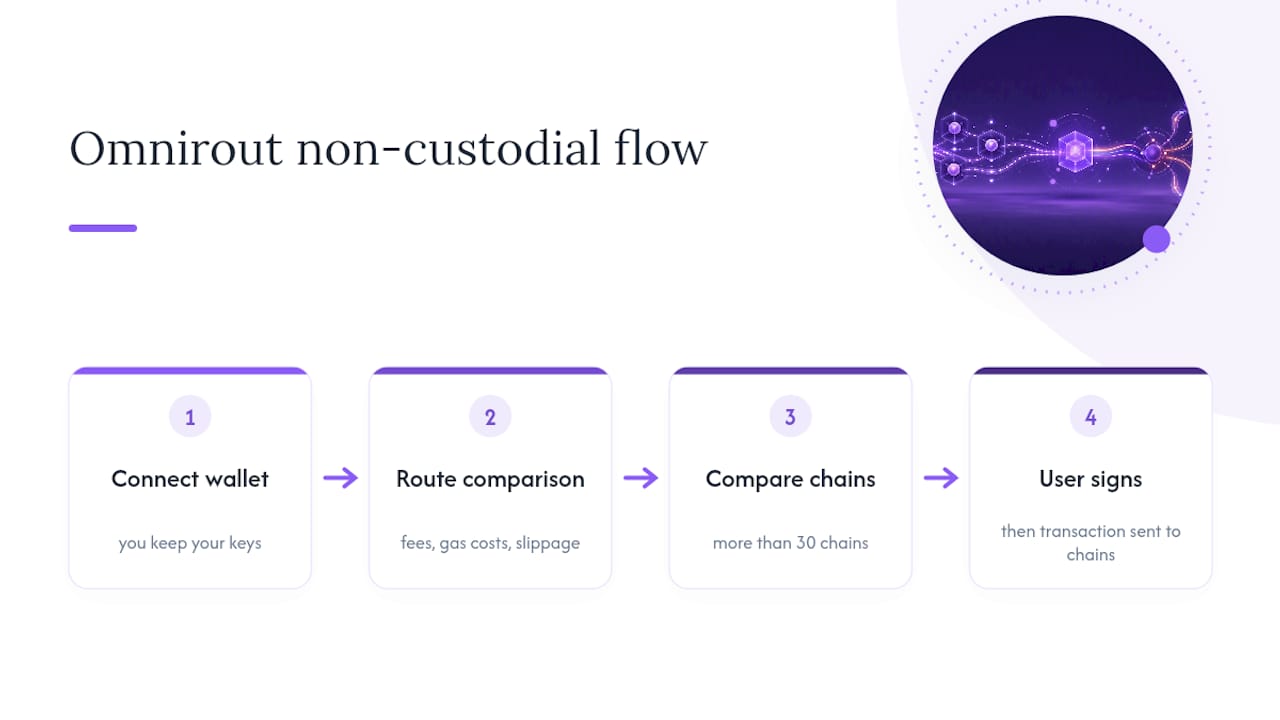
Every swap or bridge is a moment where your wallet interacts with a contract you don't control, which is exactly where most of the risk in this article lives. Omnirout addresses that by staying non-custodial the entire time: you connect your own wallet, keep your own keys, and Omnirout's route comparison shows you fees, gas costs, and slippage across more than 30 chains before you ever sign anything.
Comparing routes before you commit also reduces a quieter risk, sending value through a bridge or pool with worse execution than you realized. For deeper walkthroughs on locking down approvals or bridging assets safely across chains, Omnirout's blog has practical, step-by-step guides written for exactly this kind of operational security. Think of Omnirout as the transparent layer that sits between your wallet and the chains you're trading across, not a custodian, just a better view of the route.
What's the One Move Most DeFi Users Skip?
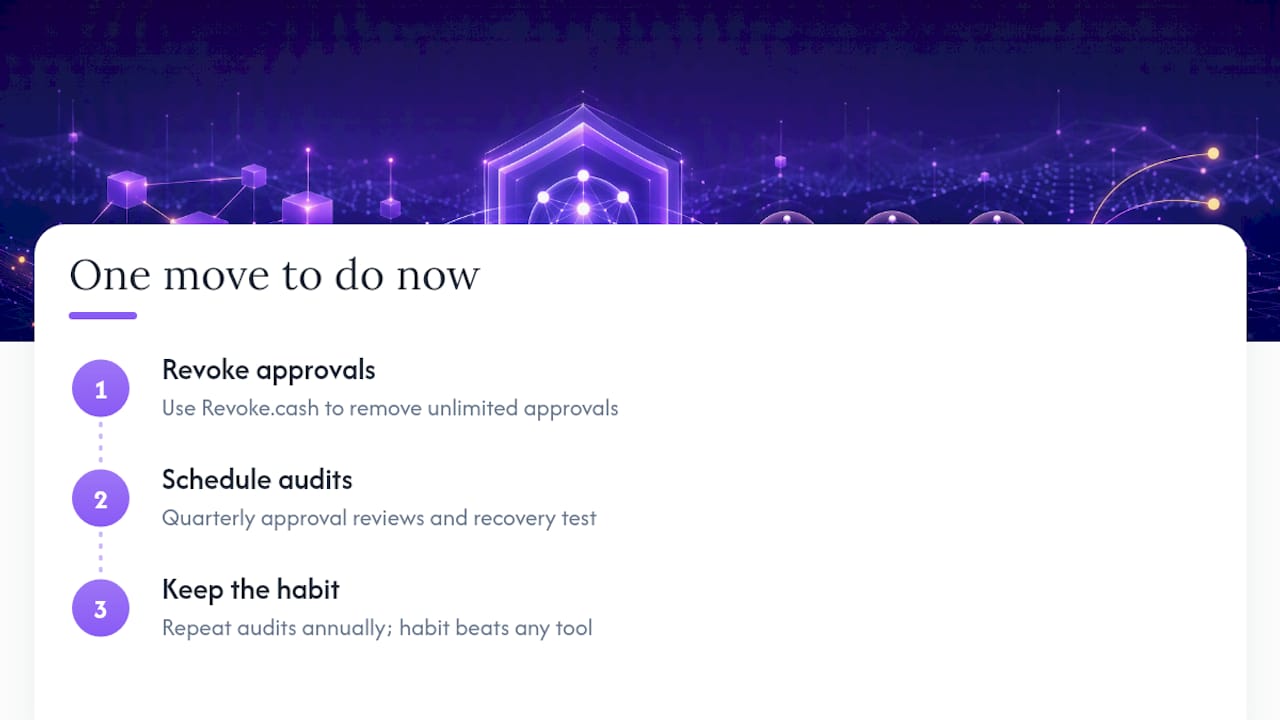
Most of the security failures I see traced back to research aren't exotic, they're neglected basics. A hardware vault, a hot wallet, a monthly approval review, and an annual recovery test cover the overwhelming majority of realistic threats. None of that requires deep technical skill.
If you do exactly one thing after reading this, revoke your unlimited approvals at Revoke.cash today. Then put a quarterly audit and recovery test on your calendar. The habit outlasts any single tool.
— Emanuele
Swap and Bridge Without Handing Over Your Keys
If the vault, hot wallet, and interaction wallet structure above sounds right for your setup, the next question is how you actually move value between chains without introducing a new custodial risk in the process. Omnirout is built for exactly that gap: it compares routes across fees, gas, and slippage on more than 30 blockchains, while your wallet keeps custody of your keys from the first click to the final confirmation.
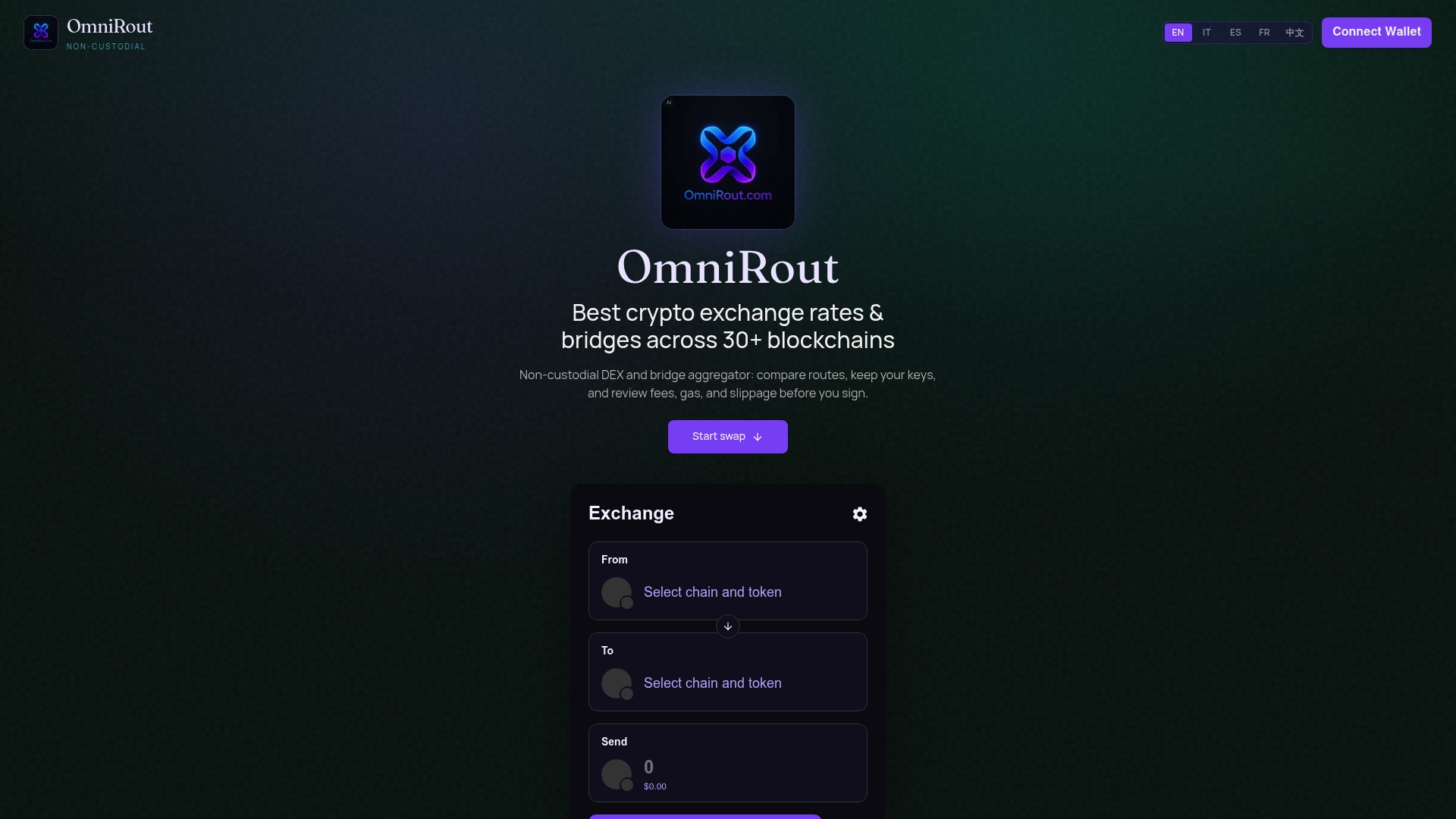
Choose Omnirout when you're bridging between chains and want to see the real cost of each path before committing, or when you're consolidating an interaction wallet's small positions back into your hot wallet and want the best rate without a custodial detour. For a deeper look at how non-custodial trading actually works under the hood, read Omnirout's guide on keeping your keys while you trade. When you're ready to compare a route yourself, head to Omnirout and run your next swap or bridge before you sign anything.
Sources
Revoke.cash and Etherscan's allowance checker for approval audits, Blockaid or Rabby Wallet for transaction previews, and ISO/IEC 27001 as a baseline trust signal for custody providers.
- Top 5 Security Strategies for DeFi Wallets | Alchemy
- Crypto Wallet Security: A Plain-English Guide for Builders | Openfort
- How to protect from protocol-level exploits (KuCoin blog)
- Ledger Wallet 4.0: Your gateway to more choice in multichain DeFi | Ledger
- Top 5 tips to stay safe with DeFi wallets | Trust Wallet