
Enable MEV protection for any swap over a few thousand dollars, any trade in a low-liquidity pool, or any transaction where slippage tolerance sits above 1%. The practical toolkit now includes private RPCs paired with order flow auctions, intent-based batch execution, encrypted mempools, and proposer-builder separation. Used correctly, these cut frontrunning and sandwich losses and sometimes pay you a rebate for the privilege.
TL;DR:
- Private RPCs and encrypted mempools effectively hide transactions from public mempools, reducing sandwich attacks and front-running risks.
- Using intent-based batch auctions eliminates direct mempool exposure, providing the highest protection, especially for large or sensitive trades.
- Choosing MEV protection depends on trade size, liquidity, and urgency, with higher risks on thin pools and larger swaps.
- The most mature protections are on Ethereum mainnet, but coverage on layer 2s and smaller chains is inconsistent and less reliable.
- Combining multiple layers of protection and thoroughly assessing provider transparency can mitigate risks while balancing costs and latency.
Table of Contents
- How MEV Protection Actually Works Under the Hood
- What You Gain and What You Give Up
- How Do You Choose the Right MEV Protection Method?
- Setting Up MEV Protection: Wallet and Aggregator Steps
- Real MEV Attacks and How Protection Stopped Them
- MEV Protection Across Chains and DEXs Isn't Uniform
- Does MEV Protection Slow Down the Network or Raise Costs?
- Where MEV Protection Research Is Headed
- The Real Trade-Off: Speed Versus Safety
- Is MEV Extraction Legal, and Should It Be Regulated?
- An Operator's View on Protection Versus Decentralization
- Compare Your Route Before You Trust Any Single One
- Sources
How MEV Protection Actually Works Under the Hood
Every protection method changes one thing: who sees your transaction before it lands on-chain, and in what order. That single variable determines whether a bot can slip trades in front of and behind yours to skim the price difference.
Private RPCs and private mempools reroute your transaction away from the public mempool, where searchers scan for profitable sandwich opportunities. Instead of broadcasting to every node on the network, your wallet sends the transaction directly to a permissioned or permissionless relay, which forwards it to a curated set of builders. The flow looks like this: wallet signs the transaction, sends it to a private RPC endpoint, the RPC operator screens it for known attack patterns, then it moves to block builders who compete to include it. Permissioned OFAs restrict which searchers can bid on your order flow; permissionless designs open that competition to anyone, which can mean better price discovery but also less accountability if something goes wrong.
Order flow auctions (OFAs) monetize the information in your pending trade by auctioning the right to execute it, then returning part of that value to you as a rebate. The mechanics vary by provider. Some run first-price sealed auctions among searchers; others use more complex scoring that weighs speed against price improvement. How a provider structures that auction directly shapes what you get back, and empirical testing of these designs finds real spread in outcomes.
Intent-based architectures and batch auctions skip the traditional transaction model entirely. You sign an "intent" describing what you want (swap X for at least Y) rather than a specific on-chain path, and a network of solvers competes to fill it at the best price. Because there's no deterministic route sitting in a public mempool, there's nothing for a sandwich bot to front-run. Chainlink's research on MEV mitigation confirms this removes the raw mempool exposure that makes sandwiching possible in the first place.
Encrypted mempools use commit-reveal sequencing or threshold encryption so transaction contents stay hidden until after ordering is locked in. This closes the information gap that lets bots see your trade and react. The trade-off is real: encryption and decryption add latency, and metadata like gas price or transaction size can still leak clues even when the payload is hidden, according to full-stack MEV defense research.
Proposer-builder separation (PBS), and its upcoming enshrined version (ePBS), restructure who assembles blocks at the consensus layer. This changes where MEV gets captured, shifting it from individual validators to specialized builders, but Ethereum's own developer documentation is clear that PBS alone doesn't guarantee protection at the application layer. You still need one of the methods above stacked on top.
Picture the same $50,000 stablecoin swap through three paths. Sent to the public mempool, a bot spots it and sandwiches the trade, costing you 0.3% to 1% in slippage. Sent through a private RPC with OFA rebates, the trade skips public visibility and you might net a small rebate instead. Sent as a signed intent into a batch auction, solvers compete on price and you get the best of several quotes with the sandwich risk eliminated outright.
A peer-reviewed survey of MEV countermeasures organizes these defenses across three layers, and that framework matters because it shows protection isn't one feature you toggle. It's a stack:
- Consensus layer: PBS and ePBS control who builds blocks and how MEV gets distributed among validators and builders.
- Base layer: private mempools and encrypted transaction pools hide content before inclusion.
- Application layer: intent-based solvers and OFAs handle execution logic and rebate distribution directly at the trade level.
With DeFi total value locked stabilizing near $118.32 billion by 2025, the dollar amount exposed to MEV extraction across these layers is not a rounding error.
What You Gain and What You Give Up
The upside is measurable: tighter execution, fewer failed transactions from front-run gas wars, and in some cases a rebate check that partially offsets your gas cost. None of that comes free, and none of it comes uniformly.
Not every private RPC or OFA performs the same. Empirical comparisons of these designs found that established players like MEV Blocker and Flashbots often deliver better inclusion timing and higher rebates than newer entrants, meaning the provider you pick genuinely changes your outcome. Treat "MEV protected" as a category, not a guarantee.
The trade-offs worth weighing before you flip the switch:
- Latency: private routing and encrypted sequencing both add milliseconds to seconds of delay compared to a raw public broadcast.
- Fees: some providers charge a flat fee or take a cut of the rebate rather than passing all value back to you.
- Exclusion risk: a permissioned relay can, in theory, choose not to include your transaction, which is a soft form of censorship.
- Centralization pressure: as more volume flows through a handful of dominant builders, MEV extraction becomes concentrated rather than distributed, a concern flagged in BIS analysis of extractable value in crypto markets.
It also helps to remember that not all MEV is harmful. The same survey research distinguishes extraction that improves market quality, like arbitrage that keeps prices aligned across pools, from extraction that directly harms your execution, like sandwiching. You don't need to eliminate all MEV. You need to eliminate the kind that's taking money out of your trade.
Before trusting any provider, check for transparent rebate reporting, some form of auditability on how orders get sequenced, and a fallback route if their primary relay goes down.
How Do You Choose the Right MEV Protection Method?
Not every trade needs the same defense. A $50 swap in a deep ETH/USDC pool carries almost no MEV risk. A $50,000 swap in a thin altcoin pool is a different animal entirely.
Run through this trade-level checklist before you execute:
- Trade size relative to pool depth. If your trade would move the price more than 1% to 2% on its own, you're a target.
- Slippage tolerance. Wide slippage settings (above 1%) give sandwich bots room to work; tight settings shrink that window.
- Pool liquidity. Thin pools amplify both natural slippage and MEV extraction risk simultaneously.
- Urgency. If you can wait for a batch auction to clear, you trade a few extra seconds for meaningfully better protection.
Then evaluate the provider or aggregator itself:
- Privacy model. Ask whether they use a private mempool, encrypted transaction pool, or intent-based solving, and whether that model is permissioned or open.
- Fee and rebate transparency. A provider that won't show you historical rebate data is a provider you should question.
- Inclusion speed. Slower inclusion sometimes means better protection, but it can also mean missed opportunities in fast-moving markets.
- Chain and wallet support. Confirm the method actually covers the chains and wallets you use, not just Ethereum mainnet.
- Audits and telemetry. Look for published performance data, not just marketing claims about "MEV protection."
Pro Tip: Ask any wallet or aggregator one direct question before enabling protection: "Can you show me rebate and inclusion data from the last 30 days?" If they can't answer, treat that as your answer.
For a large stablecoin swap, always route through a private RPC or intent-based solver. For a low-liquidity token trade, tighten slippage first and add protection second, since a thin pool can still fail even with perfect routing. For bridging, treat the destination chain's mempool exposure separately from the source chain, because cross-chain transfers often pass through more than one point of vulnerability.
Setting Up MEV Protection: Wallet and Aggregator Steps
Most wallets let you swap the default RPC endpoint for a private one in a few clicks, usually under network settings, where you paste in a private RPC URL instead of the default public node. Pair that with a tighter slippage tolerance and a shorter transaction deadline. Our breakdown of slippage tolerance ranges covers exactly how loose settings create the opening bots exploit. Where your wallet or DEX supports it, use limit orders or batch execution instead of a market swap. This removes the timing precision an attacker needs.
On the aggregator side, three habits matter:
- Compare routes before you commit. Look at fees, gas costs, and expected slippage side by side rather than trusting a single quoted price.
- Set up multi-RPC fallbacks. If your primary private RPC stalls, your transaction needs a second path so it doesn't sit unconfirmed. Our guide on speeding up a stuck transaction walks through recovery steps when that happens.
- Demand fee and rebate visibility. A dashboard that shows what you paid and what you got back beats a black-box "protected" label every time.
If you're building rather than just trading, Chainlink's mechanism research is a solid starting point for integrating intent-based submission into your own flow. Benchmark identical transactions across two or three RPC endpoints before choosing a default. Log inclusion time, final execution price, and any rebate received for each. Our developer guide to multi-hop swap routing covers how routing complexity interacts with MEV exposure when a trade crosses several pools.
Pro Tip: Run the same $1,000 test swap through three different private RPCs on a slow week. The spread in execution price will tell you more about provider quality than any marketing page.
Real MEV Attacks and How Protection Stopped Them
Sandwich attacks against large AMM swaps have been one of the most consistent extraction patterns in DeFi. An attacker spots a pending swap in the public mempool, buys the same asset first to push the price up, lets the victim's trade execute at the worse price, then sells immediately after for profit. This pattern shows up constantly on high-volume pools during periods of low liquidity or high volatility, when slippage tolerances tend to be wider out of necessity.
Routing that same trade through a private RPC removes it from public view entirely, so the attacker never sees it coming. Intent-based batch auctions go a step further: because solvers compete to fill your intent rather than execute a specific visible transaction path, there's no moment where a bot can insert itself between your trade and the market.
Liquidations on lending protocols face a related problem. Bots race to be first to liquidate an underwater position for the reward, and that race often spills into gas auctions that congest the network and raise costs for everyone else trying to transact at the same time. Encrypted mempools and fairer ordering mechanisms reduce the incentive to win purely on raw speed, shifting competition toward price rather than latency.
The pattern across every documented case is the same: visibility before finality is the vulnerability, and every protection mechanism works by closing that visibility window in a different way.
MEV Protection Across Chains and DEXs Isn't Uniform
Ethereum mainnet has the most mature MEV protection stack, largely because it has the most MEV to fight over. Private RPCs, OFAs, and PBS are all live and battle-tested here, and the market for protection providers is genuinely competitive.
Layer 2 networks and alternative chains vary widely. Some rollups inherit sequencer-level control that limits public mempool exposure by design, which sounds protective but concentrates ordering power in a single sequencer operator instead. Other L2s and app-chains have added their own private submission options, but coverage is inconsistent, and not every chain has an OFA ecosystem mature enough to generate meaningful rebates.
On the DEX side, traditional AMMs remain the most exposed model because trade execution follows a predictable on-chain path that's visible before confirmation. Order-book-style DEXs and intent-based aggregators structurally reduce this exposure, since matching happens off-chain or through solver competition rather than a public, front-runnable transaction. Our comparison of AMMs versus order books breaks down exactly why that structural difference matters for MEV risk specifically, not just for pricing efficiency.
The practical takeaway: don't assume protection travels with you when you move chains or protocols. Check whether your target chain and DEX actually support private submission or intent-based routing before you execute, especially on newer or smaller chains where the infrastructure may still be catching up.
Does MEV Protection Slow Down the Network or Raise Costs?
Protected transactions sometimes cost more upfront, either through a direct fee or a cut taken from any rebate, but they often save money overall by preventing the slippage losses a sandwich attack would have caused. The net effect for a given trade depends entirely on trade size and how exposed it would have been without protection.
At the network level, the picture is more nuanced. Private RPCs pull volume out of the public mempool, which can reduce the gas price spikes that come from competing bots bidding up transaction fees to win priority inclusion. Fewer bots racing publicly for the same opportunity can mean calmer average gas prices during normal conditions.
Batch auctions and intent-based systems compress multiple trades into fewer on-chain settlements, which can lower aggregate gas consumption compared to everyone submitting individual transactions. That efficiency gain doesn't show up as a lower price on your receipt directly, but it does reduce the total load competing for block space.
The flip side is centralization risk creating its own inefficiency. If a small number of builders or relays handle a disproportionate share of protected order flow, they gain outsized influence over inclusion and pricing, a dynamic that regulatory researchers have flagged as worth watching closely as the market matures.
Where MEV Protection Research Is Headed
ePBS activation is the biggest structural change on the near-term horizon. Once enshrined at the protocol level, it will redraw builder economics across the network, and industry analysis of the 2026 builder landscape expects operators to need protected submission paths that work across both legacy relays and ePBS-compatible builders during the transition.
Order flow auction design keeps evolving too, with more providers competing to publish clearer rebate accounting as users get better at comparing performance across services. Expect that competitive pressure to keep pushing execution quality upward, since providers that hide their numbers will lose volume to ones that don't.
Encrypted mempool research is maturing past pure theory into workable implementations, though metadata leakage and added latency remain unsolved enough that widespread adoption is still a few years out rather than a near-term shift.
Intent-based architectures are likely to keep expanding beyond simple swaps into more complex DeFi actions, since the core insight, removing deterministic on-chain paths from a user's signed payload, applies to more than just token trades.
The Real Trade-Off: Speed Versus Safety
Every protection method asks you to give up a little speed for a little safety, and how much of each you want depends entirely on what you're trading and when. A private RPC adds a small routing delay most users never notice. An encrypted mempool or a batch auction can add several seconds, which matters if you're chasing a fast-moving price but barely registers on a routine swap.
The instinct to always want the fastest possible execution is understandable, but it's often the wrong default. Speed is only valuable if the price you're racing toward is still there when you arrive, and an unprotected fast transaction frequently lands at a worse price than a slightly slower protected one. Match the protection level to the trade, not to a blanket preference for speed.
Is MEV Extraction Legal, and Should It Be Regulated?
MEV extraction sits in a genuine gray zone. Arbitrage-style extraction that keeps prices aligned across pools is broadly viewed as a normal, even beneficial, part of market function. Sandwich attacks that directly extract value from an identifiable victim's trade look a lot more like the front-running that's tightly regulated in traditional securities markets.
BIS research on extractable value in crypto and DeFi draws that comparison directly, noting that MEV has measurable economic scale and raises real questions about market fairness that regulators in traditional finance settled decades ago. DeFi hasn't settled them yet.
The ethical question underneath the legal one is just as unresolved: is it fair for a searcher to profit from information asymmetry that exists purely because of how blockchains order transactions, when no equivalent asymmetry would be tolerated on a regulated exchange? Reasonable people land in different places on that question, and the protocols themselves are still being built around competing answers.
An Operator's View on Protection Versus Decentralization
The tension nobody resolves cleanly is that the most effective protection methods concentrate trust, whether in a private RPC operator, a solver network, or a handful of dominant builders. Full decentralization and maximum MEV protection pull in opposite directions, and pretending otherwise sets up bad decisions.
Two mistakes show up constantly. First, relying on a single private RPC as if it were infallible. When it stalls or gets congested, users with no fallback route lose the exact protection they signed up for. Second, ignoring rebate accounting entirely and just trusting a "protected" label, which lets underperforming providers keep volume they haven't earned.
Watch ePBS activation, OFA competition intensifying, and encrypted mempool adoption through 2026. Each will reshape which trade-offs are worth accepting.
— Emanuele
Compare Your Route Before You Trust Any Single One
The protection methods above all share one weakness: they only work if you can actually see what you're getting into before you commit. This platform compares routes across multiple blockchains before you swap, showing you fees, gas costs, and expected slippage side by side so you're not guessing whether a given path is the exposed kind or the protected kind.
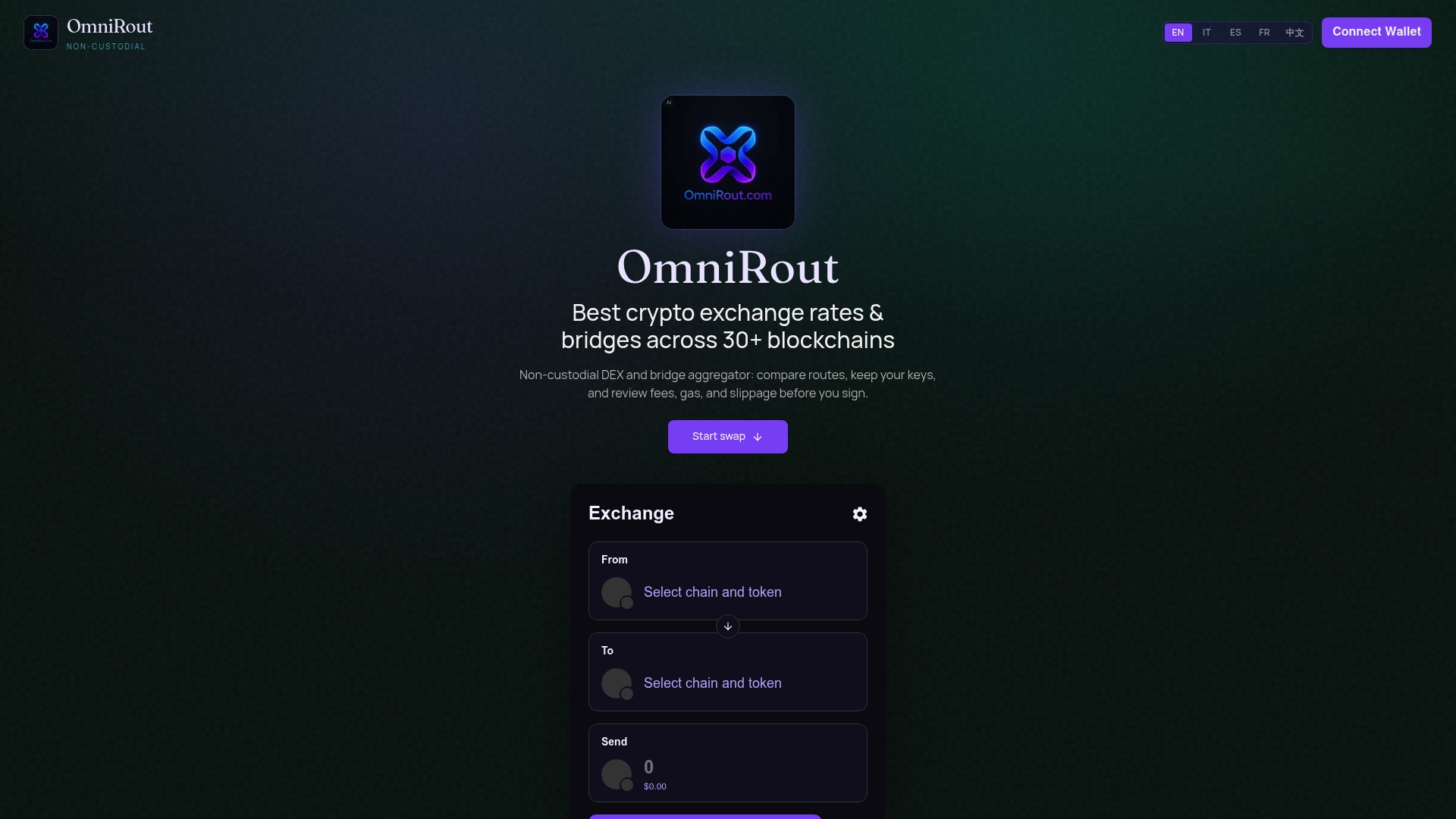
Because this platform is non-custodial, you keep control of your keys through every transaction, and the route comparison gives you the visibility that a lot of black-box "MEV protected" labels don't: you see the actual trade-off between fee, speed, and slippage before you sign anything. That transparency is what lets you personally apply the trade-level checklist covered earlier, matching pool depth and slippage risk to the right execution path instead of trusting a provider's marketing claim. Developers looking to build protected submission flows on top of routing logic can start with our guide to smart order routing for the technical detail.
Head to Omnirout to compare a live route for your next swap or bridge transfer, and see the fee and slippage breakdown before you commit a single transaction.
Sources
- MEV Protection in Decentralized Finance
- Empirical evaluation of OFA designs and private RPCs
- MEV (Ethereum developer docs)