
A multi-chain DEX lets you swap tokens across different blockchains without handing over custody of your funds. Instead of moving assets to a centralized exchange and trusting a company to hold your keys, you connect a wallet, pick a route, and trade directly against on-chain liquidity. For most traders, the practical default is a non-custodial aggregator that previews route fees and slippage before you commit to a transaction.
TL;DR:
- Multi-chain DEXes support more networks, reducing manual bridging but increasing the complexity and number of fees involved in cross-chain trades.
- Bridges can be either lock-and-mint or liquidity-backed, affecting your exposure to risks like exploits or peg disruptions, with native routes generally safer.
- Slippage and gas costs vary significantly across routes, making it essential to compare fee breakdowns and run small tests before committing larger trades.
- Transparent route previews that display all fees and costs before signing help prevent unexpected expenses and foster cautious trading behavior.
- Prioritize non-custodial platforms with supported chains, visible fee structures, and verified audits to minimize risks and optimize trade outcomes.
Table of Contents
- What Is a Multi-Chain Dex, and How Is It Different From a Single-Chain Dex or a Cex?
- How Cross-Chain Swaps Actually Work: Bridges, Wrapped Assets, and Routing
- What You Gain (and Risk) Trading Across Multiple Chains
- How to Evaluate and Use a Multi-Chain Dex: The Pre-Trade Checklist
- Why Route Transparency Should Be the Baseline, Not a Feature
- See Your Route Before You Trade It
- Where to Verify These Claims Yourself
- Sources
- FAQ
What Is a Multi-Chain Dex, and How Is It Different From a Single-Chain Dex or a Cex?
A decentralized exchange, or DEX, is a non-custodial marketplace where smart contracts run the trade instead of a company's order book. Chainalysis defines a DEX around this core mechanic: smart contracts hold liquidity in pools, and automated market makers (AMMs) set prices algorithmically instead of matching buyers with sellers directly. A single-chain DEX only works within one blockchain's ecosystem, say, Ethereum or Solana. A multi-chain DEX (or DEX aggregator) extends that model across many networks at once, routing your trade through whichever chain and pool combination gets you the best result.
The custody difference from a centralized exchange (CEX) is the whole point. Coinbase's own explainer on DEXs frames DEXs as peer-to-peer marketplaces where you never deposit funds into a company-controlled account. A CEX holds your assets, supports fiat deposits and withdrawals, and can freeze accounts or halt withdrawals. A DEX cannot do any of that because your wallet, not the exchange, holds the keys.
Chain support varies a lot between platforms, and it matters more than most traders assume:
- Some DEXs cover a handful of major chains like Ethereum, Arbitrum, and Base.
- Others stretch across numerous networks, including newer Layer 2s and alternative Layer 1s.
- Catalog listings such as Alchemy's directory of multichain DEXs show dozens of deployments spread across different ecosystems.
- Narrower chain coverage means more manual bridging if your target token lives elsewhere.
If the token you want sits on a chain your DEX doesn't touch, you're stuck bridging manually before you can even start the swap you came for.
How Cross-Chain Swaps Actually Work: Bridges, Wrapped Assets, and Routing
Moving value between blockchains requires a bridge, and not all bridges work the same way. Two designs dominate. Lock-and-mint bridges lock your original token in a contract on the source chain and mint a wrapped version on the destination chain. Liquidity-backed bridges instead swap your token against a pool of native assets already sitting on both sides, skipping the wrapped-token step entirely.
That distinction changes your risk exposure. A wrapped asset is only worth what people trust the bridge to honor. If the bridge's contract gets exploited, or the custodian backing the wrapped token disappears, that wrapped token can lose its peg fast, even while the "real" asset trades normally elsewhere. Native issuance through liquidity-backed routes avoids that specific counterparty risk, though it depends on deep enough pools existing on both chains.
Aggregators sit on top of this plumbing. Rather than sending your entire trade through one pool, an aggregator can split it across several venues, and Chainalysis notes that this kind of routing directly reduces slippage compared to dumping a large order into a single pool. A multi-hop swap might route your USDC through two or three intermediate pools and even a bridge hop before landing as the token you actually wanted, and the aggregator's job is finding the cheapest path through that maze.
Here's where the actual charges show up on a typical cross-chain trade:
- Gas fee on the source chain to initiate the swap or bridge transaction.
- Bridge or protocol fee for moving value between chains.
- Gas fee on the destination chain to finalize the trade or mint the received asset.
- DEX or aggregator fee, usually a small percentage of trade value.
Pro Tip: Check the gas estimate before you check the protocol fee. On congested networks, gas alone can cost more than every other fee combined, which is exactly the kind of hidden cost a route comparison tool is built to surface before you hit confirm.
What You Gain (and Risk) Trading Across Multiple Chains
Trading across chains instead of staying locked into one gives you real advantages, but each one comes with a corresponding tradeoff worth understanding before you commit capital.
The upside is straightforward. You get access to deeper, more fragmented liquidity instead of being boxed into whatever a single chain's pools offer. You reach tokens that only exist natively on specific networks. You retain custody the entire time, which Chainalysis identifies as a structural feature of DEX design rather than a marketing claim. And because no central operator controls listings, censorship resistance stays intact.
The tradeoffs are just as real:
- Bridge contracts are a favorite exploit target, and a compromised bridge can freeze or drain funds mid-transfer.
- Wrapped assets carry counterparty exposure to whatever backs the peg.
- Every extra chain hop adds another gas payment, which stacks up fast on multi-leg routes.
- Impermanent loss still applies to any liquidity pool you interact with indirectly through routing, especially in volatile pairs.
- Slippage tends to widen on cross-chain paths simply because there are more moving parts between quote and settlement.
None of this makes multi-chain trading a bad idea. It makes due diligence non-negotiable. Preview the route before confirming, run a small test trade on any new path, and stick to platforms that publish audit results rather than ones that just claim to be audited.
How to Evaluate and Use a Multi-Chain Dex: The Pre-Trade Checklist
Choosing a platform comes down to six criteria, and skipping any one of them is how traders get surprised by costs they didn't see coming.
Custody model comes first: confirm the platform never takes possession of your assets, which is the entire premise separating a DEX from a CEX. Supported chains come second, since a platform that doesn't cover your target network forces you into manual bridging before you even reach the trade. Route transparency matters just as much: can you see the exact path your trade takes before signing? Fee split is the fourth criterion, because a "low fee" protocol charge means nothing if gas silently doubles your total cost, a pattern Coinbase Learn flags directly as a common blind spot. Round it out with audit status and open-source code, both of which tell you whether a team is willing to be checked.
Once you've picked a platform, run through these steps every time before you trade:
- Connect your wallet and confirm it's on the correct network for your source token.
- Enter your trade and let the platform generate route options.
- Compare the fee and gas breakdown across at least two routes, not just the fastest one.
- Set a slippage tolerance that matches the pair's volatility, tighter for stable pairs, looser for thin or exotic ones.
- Check token approvals and revoke any unlimited allowances you no longer need.
- Run a small test trade on unfamiliar routes before committing full size.
Pro Tip: If a platform's route comparison shows two paths with wildly different gas estimates for the same swap, that's not a bug. It usually means one path involves an extra bridge hop, which is exactly the tradeoff a good aggregator should be showing you plainly, not burying in fine print.
Red flags worth walking away from: no audit history anywhere in the docs, a support team that dodges questions about fee structure, and any route preview that doesn't break out gas separately from protocol fees. Live trackers like DefiLlama let you cross-check a protocol's total value locked against its own claims, which is a fast way to spot a platform that's smaller and less battle-tested than its marketing suggests.
Why Route Transparency Should Be the Baseline, Not a Feature
Most of the damage in cross-chain trading doesn't come from exotic hacks. It comes from traders not knowing what a route actually costs until after they've signed the transaction. That's a design failure, not bad luck, and it's fixable.
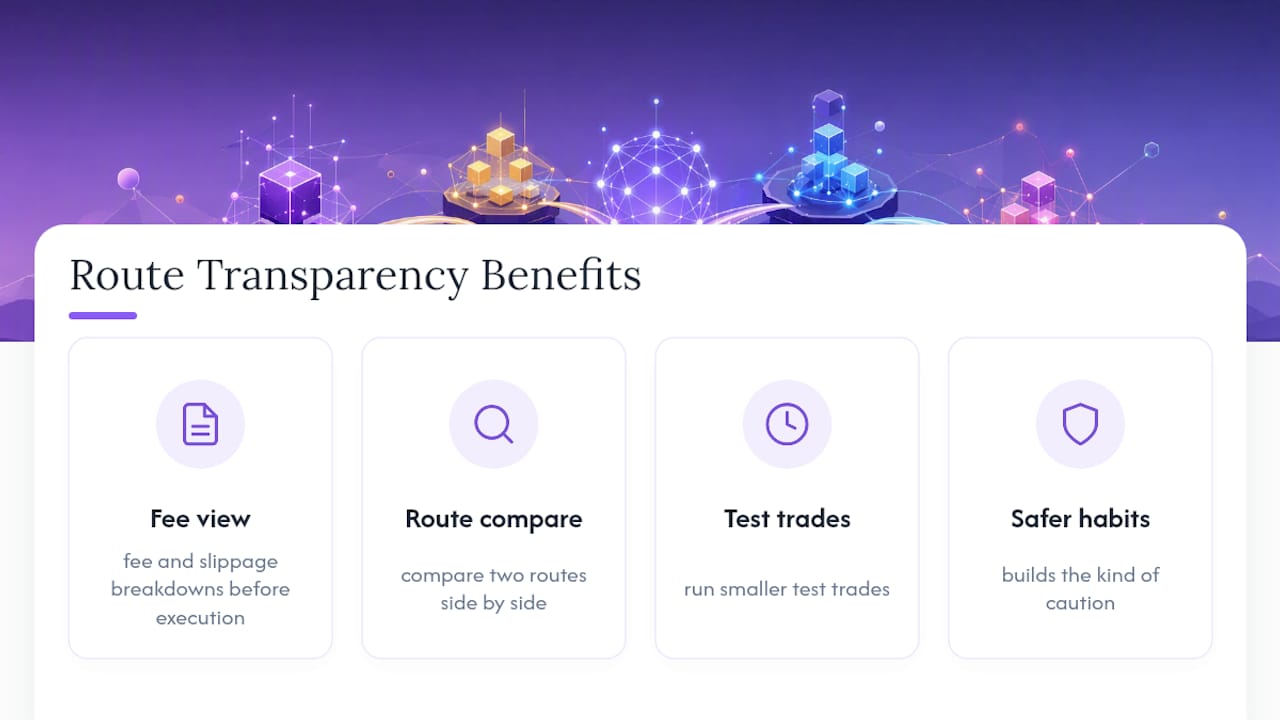
Platforms that show fee and slippage breakdowns before execution change trader behavior in a measurable way. When you can see the gas hit coming, you run smaller test trades. When you can compare two routes side by side, you stop granting unlimited token approvals out of habit because you're paying closer attention to what you're signing. Transparency doesn't just save money on any single trade. It builds the kind of caution that keeps traders out of trouble on the trades that go wrong.
The industry default has been to treat this as optional polish. It should be table stakes.
— Emanuele
See Your Route Before You Trade It
This platform is built around the one thing this whole guide argues for: seeing the real cost of a trade before you commit to it. It is a non-custodial DEX and bridge aggregator that compares routes across multiple blockchains, laying out fees, gas costs, and slippage side by side so you're picking a route with full information instead of hoping it works out.
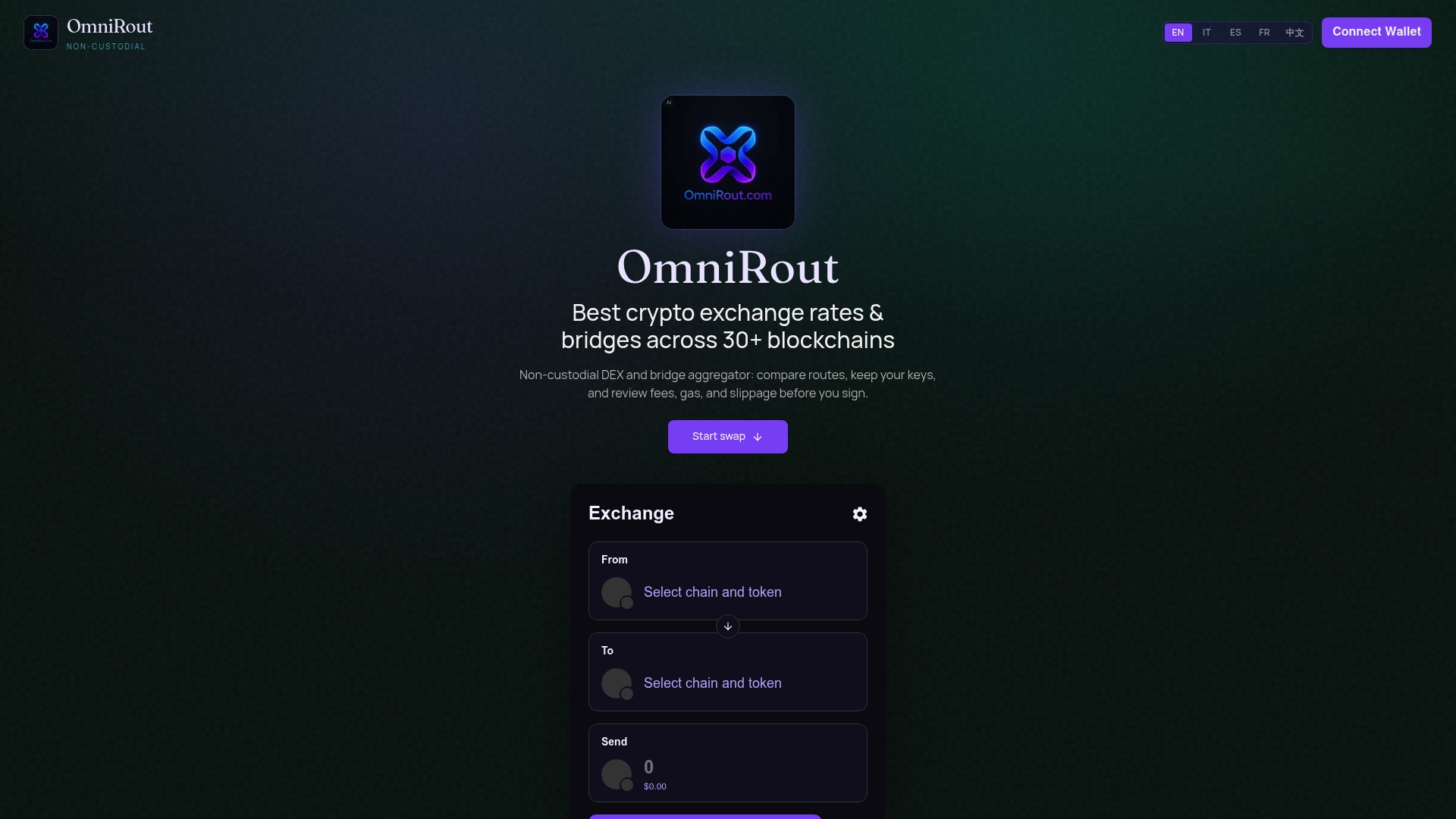
Getting started follows the same checklist covered above. Connect your wallet, no account creation, no deposit into anyone else's custody. Enter the swap you want and let the platform generate route options across supported chains. Compare the breakdown on each one, then run a small test trade if the path is new to you before committing full size. For the mechanics behind multi-hop routing or how wrapped assets compare to native bridging, Omnirout's technical posts walk through the tradeoffs in more depth. Head to Omnirout to preview your first route and see the fee breakdown before you sign anything.
Where to Verify These Claims Yourself
Don't take any DEX's word for its own numbers. Chainalysis's DEX glossary and Coinbase Learn's explainer cover the underlying mechanics in plain language. For checking which chains a given platform actually supports, Alchemy's multichain DEX directory is a useful cross-check against marketing claims. And before trusting any protocol with size, run its numbers through DefiLlama to see real total value locked and activity trends rather than a homepage claim.
Sources
- What Is a Decentralized Exchange (DEX)? - Chainalysis
- What is a DEX? - Coinbase Learn
- List of 23 Decentralized exchanges (DEXs) on Multichain - Alchemy
- DefiLlama
FAQ
Which DEX Is Best for Cross-Chain Swaps?
The best choice is a non-custodial aggregator that previews fees, gas, and slippage across routes before you sign, rather than a single-chain DEX that forces you to bridge manually first. One platform built specifically around that route-comparison model across multiple chains offers these features.
Is XRP a DEX Coin?
No. XRP is the native token of the XRP Ledger, a payments-focused blockchain, not a token tied to any decentralized exchange protocol.
What Is Replacing Blockchain?
Nothing is replacing blockchain technology broadly. Development is shifting toward better interoperability between chains, faster Layer 2 networks, and more efficient cross-chain routing rather than any single replacement technology.
What Is the Most Trusted DEX?
Trust comes down to verifiable signals rather than reputation alone: audit history, non-custodial design, open-source code, and transparent route pricing. Checking a platform's total value locked on DefiLlama alongside its audit records is a more reliable trust test than any single ranking.